
China Top 10 Insecticides and Pesticides Manufacturers?
China’s insecticides and pesticides industry sits at a difficult intersection of food security, science, and environmental responsibility. According to the FAO report Pesticides Use and Trade 1990–2022, global pesticide use reached approximately 3.70 million tonnes in 2022. That figure shows the market’s scale. It also exposes its pressure.
China remains a major manufacturing base for crop-protection products, active ingredients, formulations, and export supply chains. However, a “top 10” ranking cannot rely only on production volume. Company transparency, formulation quality, research capacity, regulatory compliance, and safer-use practices matter just as much. Public databases rarely compare these factors evenly. This article therefore treats the ranking as a practical industry guide, not an absolute verdict.
Dr. Graham Matthews, a leading authority on pesticide application, emphasized that “the effectiveness of a pesticide depends greatly on how it is applied.” His point remains relevant today. A powerful active ingredient can still fail beside a poorly calibrated sprayer, wet leaves, or incorrect timing. The FAO and World Health Organization’s International Code of Conduct on Pesticide Management also promotes responsible production, distribution, and use throughout the product life cycle.
This overview examines ten influential Chinese manufacturers through an E-E-A-T lens. It considers technical experience, product specialization, manufacturing credibility, and documented market presence. Some conclusions remain imperfect. Company data can change quickly. Buyers should verify registrations, certificates, factory audits, and local approvals before making commercial decisions. The strongest supplier is not always the largest one. Sometimes, consistency matters more than scale.
Definition and Scope of Insecticide and Pesticide Manufacturers in China
China Top 10 Insecticides and Pesticides Manufacturers?
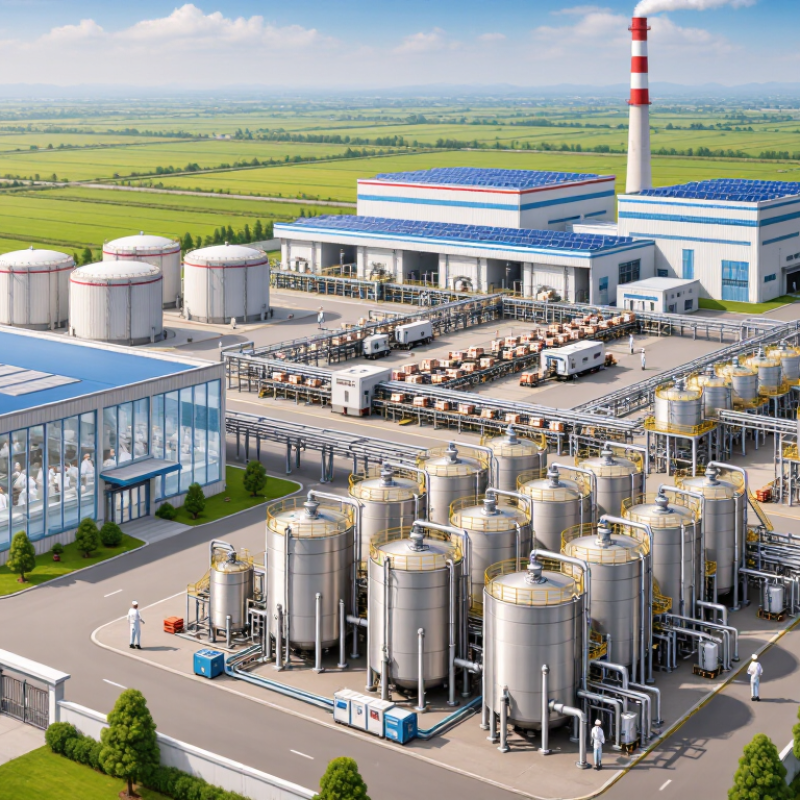
In China, an insecticide or pesticide manufacturer is more than a factory with mixing tanks. The term covers companies that research, produce, formulate, test, and legally register crop-protection products. Some make active ingredients, while others convert approved materials into suspension concentrates, granules, powders, or seed treatments. A few focus on biological products. Their facilities may include pilot laboratories, sealed filling lines, residue-testing rooms, and batch-tracking systems.
The scope should also include qualified contract manufacturers and formulation specialists. It should not automatically include trading companies or simple distributors. A reliable assessment examines registration status, manufacturing licenses, quality controls, worker protection, and environmental management. In China, registered products must meet national regulatory requirements before lawful agricultural use. Documentation should connect each batch to raw materials, production records, laboratory results, and responsible personnel. This sounds basic. In practice, records can differ greatly between factories.
A credible “top ten” list therefore needs clear evidence, not only export volume or online visibility. Useful criteria include technical capacity, product consistency, research investment, regulatory experience, and customer complaint handling. Site audits can reveal details that brochures omit, such as worn seals or weak storage discipline. That matters. Public information is sometimes incomplete, and rankings may change after independent verification. A careful article should separate confirmed manufacturers from companies that merely sell pesticide products.
| No. | Data Dimension | Relevant Industry Fact | Application to Manufacturer Assessment |
|---|---|---|---|
| 1 | Industry Definition | Pesticide manufacturing covers products used to prevent, control, or eliminate pests, diseases, weeds, rodents, and other harmful organisms, as well as products that regulate plant growth. | The manufacturer scope includes both insecticide producers and broader pesticide producers serving agricultural, forestry, public-health, and other permitted applications. |
| 2 | Core Insecticide Categories | Common insecticide product groups include organophosphates, carbamates, pyrethroids, neonicotinoids, insect growth regulators, and biological insecticides. | A company may specialize in one chemistry platform or operate across several active-ingredient and formulation categories. |
| 3 | Broader Pesticide Portfolio | The Chinese pesticide industry includes insecticides, herbicides, fungicides, acaricides, plant growth regulators, rodenticides, and biological pesticides. | Top manufacturers are commonly evaluated by portfolio breadth, technical capability, formulation capacity, and ability to serve multiple crop-protection segments. |
| 4 | Regulatory Registration | Under China’s pesticide regulatory framework, pesticides generally require registration before production, import, operation, or use. | Registration experience, product dossiers, efficacy data, residue information, and regulatory compliance are important manufacturer-selection criteria. |
| 5 | Production Licensing | Pesticide production in China is subject to production-permit requirements and supervision by the relevant agricultural and market-regulation authorities. | A qualified manufacturer should be assessed on valid production permits, permitted product categories, facility compliance, and quality-management systems. |
| 6 | Manufacturing Chain | The industry includes upstream active-ingredient production, technical-material processing, formulation manufacturing, packaging, storage, and distribution. | Manufacturers with integrated production capabilities may offer stronger control over supply continuity, technical specifications, and product customization. |
| 7 | Formulation Capability | Common pesticide formulations include emulsifiable concentrates, suspension concentrates, soluble liquids, wettable powders, water-dispersible granules, and granules. | Formulation capacity indicates whether a producer can adapt products to different crops, application equipment, climatic conditions, and customer requirements. |
| 8 | Quality and Testing | Pesticide manufacturers need controls for active-ingredient content, impurities, physical properties, stability, packaging compatibility, and batch consistency. | Laboratory capability, traceability, quality-control procedures, and compliance with applicable Chinese and destination-market standards are key evaluation factors. |
| 9 | Environmental and Safety Compliance | Pesticide production involves regulated management of hazardous chemicals, wastewater, emissions, solid waste, worker safety, storage, and transport. | Environmental permits, safety systems, emergency procedures, cleaner-production practices, and compliance records should be reviewed when comparing manufacturers. |
| 10 | Domestic and Export Coverage | Chinese pesticide manufacturers serve domestic crop-protection demand and international markets, where products may require additional registration and compliance documentation. | Export capability can be measured through regulatory support, multilingual labels and technical documents, logistics experience, quality certifications, and destination-market registrations. |
Related Posts
-

Top 5 Benefits of Pyroxasulfone Herbicide for Effective Weed Control?
-
How to Choose Effective Crop Protection Solutions for Your Needs?
-

2026 Top Trends in Syngenta Seed Treatment Innovations
-
How to Choose the Right Chemical Weed Control Products?
-
Top Crop Protection Solutions for Global Buyers?
-
10 Best Practices for Using Pesticides in Agriculture?
