
Why Use Biologicals in Agriculture?
Agriculture faces a difficult balance: producing more food while protecting soil, water, biodiversity, and farm profitability. This is where biologicals agriculture becomes increasingly relevant. Biological products include microbial inoculants, biostimulants, biopesticides, and natural plant extracts. They can support nutrient uptake, improve stress tolerance, or help manage selected pests and diseases.
Pam Marrone, a respected biologicals industry expert, has often emphasized that “biologicals are not a silver bullet.” This caution matters. Biologicals should complement sound agronomy, not replace it. Their performance can change with temperature, soil moisture, crop variety, application timing, and field conditions. A product that works well in a greenhouse may perform differently across a dry commercial field.
The practical value appears in small details. A treated seed may establish more evenly after cold planting. A microbial product may help roots explore compacted soil. A biocontrol application may reduce pressure from a specific pest when scouting confirms the right timing. These outcomes require measurement.
Farmers should examine independent trial data, product consistency, compatibility, and return on investment. They should also ask uncomfortable questions. Is the result repeatable? Does it remain useful under local conditions? Is the application process realistic during a busy season?
Biologicals agriculture offers promise, but promise is not proof. Careful testing, transparent claims, and experienced advice will determine whether biologicals become dependable tools or temporary enthusiasm.
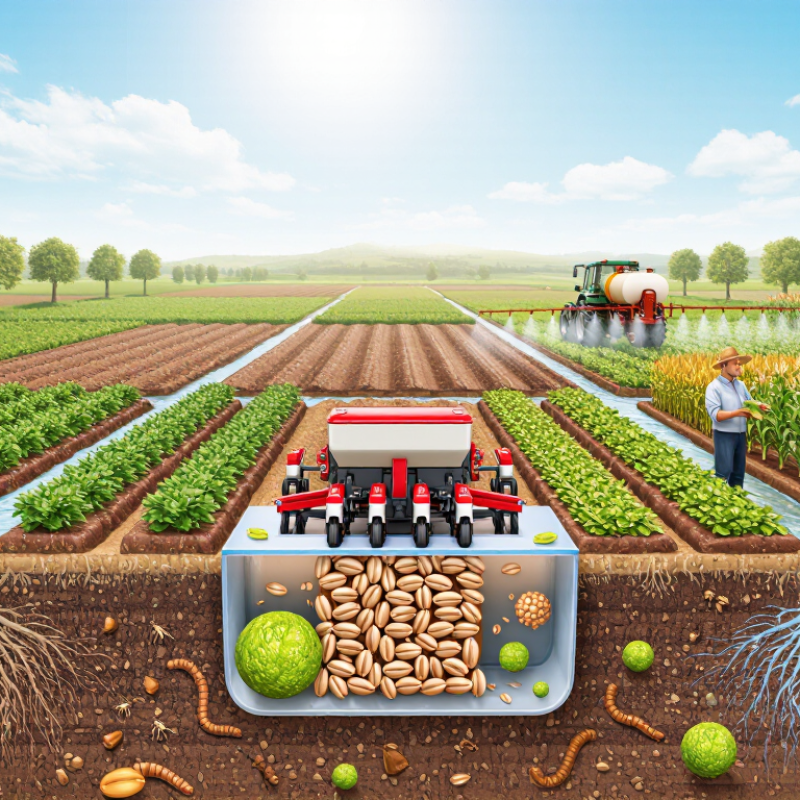
Define Agricultural Biologicals: Three Main Input Classes and Their Functions
Why Use Biologicals in Agriculture?
Agricultural biologicals are farm inputs made from living organisms, natural compounds, or biological processes. Their purpose is not simply to replace conventional products. They support specific crop, soil, or pest-management needs. The three main classes are biopesticides, biofertilizers, and biostimulants. Each class works differently, so treating them as interchangeable can lead to poor decisions.
Biopesticides use beneficial microorganisms, plant extracts, or naturally occurring substances to manage insects, diseases, or weeds. Their performance often depends on correct timing, temperature, humidity, and pest pressure. Biofertilizers contain useful microorganisms that improve nutrient availability. Some help fix nitrogen, while others release phosphorus or support root development. They do not always supply nutrients directly. Instead, they can improve how plants access them.
Biostimulants support plant processes rather than directly controlling pests or replacing fertilizer. They may improve root growth, nutrient-use efficiency, stress tolerance, or recovery after drought. In practice, an agronomist might examine root density, leaf color, and soil moisture before judging results. Timing matters. A product applied to dry soil may perform poorly, even when its biology is sound. Results can vary. That is an uncomfortable truth. Field trials, local conditions, clear application records, and independent evidence remain essential. Biologicals can be valuable tools, but they require realistic expectations and careful management.
Map Market Growth: Industry Forecasts Exceed US$20 Billion by 2030
Why Use Biologicals in Agriculture?
Biologicals are reshaping farm decisions as growers seek efficient, lower-impact tools. The category includes microbial inoculants, biocontrol products, and biostimulants. Market forecasts suggest the biologicals industry could exceed US$20 billion by 2030. Estimates vary, however. Definitions, regions, and product categories can change the final number. The direction remains clear. More farms are testing biological inputs beside conventional programs, not always replacing them.
In field work, results depend on living conditions. Soil moisture, temperature, organic matter, and application timing can influence performance. A product may work well in one field and disappoint in another. That is an uncomfortable reality. Reliable decisions need replicated trials, clear labels, independent data, and records from local plots. Growers should compare treated and untreated areas, measure yield quality, and watch costs per hectare. Expert advice also matters when biologicals interact with fertilizers, irrigation, or crop protection programs.
Tips: Start with one manageable field zone. Test soil before applying. Follow storage instructions carefully, because living organisms can lose activity under heat. Record weather and application timing. Avoid judging success after one season. A weak result may reflect poor timing, unsuitable soil, or unrealistic expectations. Reviewing the evidence with an agronomist can prevent expensive assumptions. The market may grow rapidly, but practical value will still depend on consistent farm-level performance.
Agricultural biologicals are forecast to grow from approximately US$13.5 billion in 2023 to about US$25.0 billion by 2030, exceeding the US$20 billion threshold as demand increases for biopesticides, biostimulants, and microbial soil amendments.
The figures represent a consolidated global market outlook based on published industry forecasts; annual estimates are rounded.
Quantify Nitrogen Fixation: Microbes Can Supply Up to 300 kg N/ha
Why Use Biologicals in Agriculture?
Biologicals can turn microbial activity into a measurable nitrogen resource. In suitable legume-based systems, nitrogen-fixing microbes may supply up to 300 kg N/ha. That figure is a ceiling, not a promise. Soil pH, moisture, temperature, crop health, and compatible microbial partners strongly influence results. A healthy root system may show nodules, but visible nodules do not prove effective fixation. We need measurements.
In field work, I would compare inoculated and untreated plots under similar conditions. Plant tissue tests, yield records, and soil nitrogen sampling reveal more than appearance alone. Isotope methods can provide stronger estimates when budgets allow. Fixation also differs from nitrogen immediately available to the next crop. Some nitrogen stays in plant biomass or soil organic matter. This distinction is easy to miss.
Tips: Record planting dates, rainfall, soil pH, and crop growth. Check roots for active nodules with a pink or red interior. Avoid treating 300 kg N/ha as a guaranteed fertilizer replacement. Local trials matter more than impressive figures. My own interpretation may still be incomplete, especially where soil biology changes across a single field. Use repeated measurements and qualified agronomic advice before changing a nutrient program.
| Biological System | Typical Crop or Environment | Approximate Biological Nitrogen Fixation | Main Microbial Partner | Conditions Supporting Higher Fixation | Practical Interpretation |
|---|---|---|---|---|---|
| Symbiotic fixation in forage legumes | Alfalfa, clover and other perennial or annual forage legumes | 100–300 kg N/ha per year | Root-nodule-forming rhizobia | Effective nodulation, adequate phosphorus and sulfur, suitable soil pH, good moisture and active plant growth | Among the highest agricultural rates of biological nitrogen fixation; the upper end is possible in well-managed, high-biomass stands. |
| Symbiotic fixation in soybean | Soybean production systems | 50–200 kg N/ha per crop | Bradyrhizobium and related soybean-nodulating bacteria | Compatible inoculation, warm soils, adequate molybdenum and cobalt availability, and limited early-season nitrogen fertilizer | Can supply a substantial share of crop nitrogen demand, although the amount varies with yield, nodulation and growing conditions. |
| Symbiotic fixation in grain legumes | Pea, common bean, chickpea, lentil and faba bean | 20–150 kg N/ha per crop | Crop-specific rhizobia | Correct bacterial strain, suitable soil pH, adequate phosphorus, and freedom from waterlogging, salinity and severe drought | Fixation is highly crop- and environment-dependent; some grain legumes may leave little net nitrogen after grain harvest. |
| Associative or endophytic fixation in cereals | Maize, wheat, sugarcane and other non-legume crops | 5–40 kg N/ha per crop | Free-living, associative or endophytic diazotrophic bacteria | Low-to-moderate available soil nitrogen, active root growth, suitable carbon supply, and favorable temperature and moisture | Usually supplements rather than replaces fertilizer nitrogen; field responses are less consistent than in legume–rhizobia symbioses. |
| Cyanobacterial fixation in flooded rice | Flooded or wetland rice systems | 20–40 kg N/ha per crop | Free-living cyanobacteria and cyanobacteria associated with aquatic plants | Flooded conditions, sunlight, phosphorus availability and limited disturbance of the surface water layer | Can contribute biologically fixed nitrogen, particularly where organic amendments or suitable aquatic biological communities are present. |
| Azolla–cyanobacteria association | Rice paddies and some aquatic production systems | 30–60 kg N/ha per crop | Anabaena azollae living within the Azolla fern | Warm water, adequate phosphorus, sunlight and management that allows Azolla biomass to grow and decompose in the field | Useful mainly in flooded systems; nitrogen contribution depends on biomass production and incorporation timing. |
| Biological nitrogen fixation in mixed grass–legume pasture | Pastures containing clover, vetch or other forage legumes | 50–200 kg N/ha per year | Rhizobia in legume root nodules | A vigorous legume proportion, effective nodulation, balanced soil fertility and adequate rainfall | Fixed nitrogen may benefit companion grasses through root turnover, exudates, grazing returns and residue decomposition. |
| Non-symbiotic free-living fixation | Soils and crop rhizospheres without a specialized host partnership | Typically below 10–20 kg N/ha per year | Free-living diazotrophic bacteria and archaea | Readily available carbon, suitable soil moisture, moderate oxygen conditions and low mineral nitrogen availability | Generally a background nitrogen input rather than a complete replacement for fertilizer or symbiotic fixation. |
| Important: These are indicative field ranges for biological nitrogen fixation, not guaranteed fertilizer-equivalent rates. Actual fixation depends on crop species, microbial compatibility, soil pH, nutrient balance, temperature, water availability, yield level, management and the amount of nitrogen removed at harvest. The upper value of approximately 300 kg N/ha per year is associated primarily with highly productive, well-nodulated forage legume systems. | |||||
Measure Biopesticide Adoption: About 5% of Global Pesticide Sales
Biologicals are gaining attention, but their actual adoption remains modest. Industry estimates place biopesticides at about 5% of global pesticide sales, according to DunhamTrimmer’s 2024 Global Biocontrol Market Report. This figure shows progress, yet it also exposes a wide gap between interest and field use.
Farmers often adopt these products when conventional programs face resistance, residue concerns, or stricter market requirements. Biologicals can support integrated pest management through microbial agents, natural compounds, and beneficial organisms. However, performance may change with temperature, sunlight, water quality, and application timing. A product that works well in a cool trial plot may struggle during a hot, dry week.
The scale of conventional agriculture remains enormous. FAO’s Pesticides Use and Trade report recorded about 3.70 million tonnes of pesticide active ingredients used globally in 2022. Biologicals therefore represent a small share of a very large system. That 5% estimate should not be treated as a universal measurement, because definitions and market boundaries differ. Some reports include biostimulants, while others count only registered biopesticides. More transparent reporting is needed. On the farm, adoption is measured differently: a grower checks pest pressure, spray records, crop quality, and profit per hectare. The numbers are encouraging, but the evidence is still uneven.
Evaluate Field Value: Compare Yield, ROI, Regulation, and Farm-Level Risk
Why Use Biologicals in Agriculture?
Evaluate Field Value: Compare Yield, ROI, Regulation, and Farm-Level Risk
Biologicals should earn their place through field value, not promising language. Yield is only one part of that value. Compare treated strips with untreated checks under similar soil, weather, and management conditions. Replicated trials provide stronger evidence than one successful corner of a field. Measure harvested yield, moisture, quality, and timing of maturity. Small gains can matter when grain quality improves. They can also disappear in a difficult season.
The financial test must include every added cost. Count the product, labor, application pass, equipment use, and storage needs. Then compare the likely return with a realistic break-even yield increase. The arithmetic is simple. The assumptions are not. A two-percent yield response may look attractive in a trial, but transport costs or poor timing can erase it. Sensitivity analysis helps expose that weakness. I would also examine results across several seasons, because one season rarely proves reliability.
Regulation creates another practical filter. Registration, label language, worker requirements, and permitted crops vary by jurisdiction. Use only products approved for the intended use, and keep application records. Farm-level risk includes inconsistent performance, poor storage stability, tank-mix incompatibility, and limited technical support. A biological is not automatically low-risk. That assumption can fail. Before expanding acreage, test a manageable area and define stop-loss conditions. Field notes should record weather, soil moisture, application timing, and visible crop response. Honest records may challenge the original expectation.
Related Posts
-
Top Syngenta Fungicides for Effective Crop Protection?
-
Why Choose Status Herbicide for Effective Weed Control?
-

10 Best Biologicals for Sustainable Agriculture Success?
-

What Are the Most Common Farm Chemicals and Their Uses?
-
10 Best Practices for Using Pesticides in Agriculture?
-

Top 10 Agriculture Chemical Solutions for Global Buyers?