NACL Industries Limited

Top 10 Types of Pesticide Control Products for Global Buyers

Global buyers need more than a long product list when evaluating pesticide control solutions. They need clear categories, verified performance, and responsible use guidance. This guide examines ten major types, including insecticides, herbicides, fungicides, rodenticides, nematicides, biological pesticides, pheromone traps, repellents, growth regulators, and monitoring products. Each category serves a different purpose. A greenhouse may require sticky traps and biological agents, while a grain warehouse may need sealed monitoring systems and approved protectants.

Dr. David Pimentel, a respected entomologist and agricultural researcher, warned, “Pesticides are designed to kill pests, but they also kill beneficial organisms.” His observation remains important for international purchasing decisions. Effective pesticide control should reduce target pests without creating unnecessary risks for workers, crops, pollinators, soil, or nearby water. Buyers should examine active ingredients, application rates, residue requirements, safety data sheets, packaging quality, and supplier traceability. Local registration matters. A product accepted in one market may be restricted in another.

Practical details often decide success. Look for tamper-resistant containers, readable labels, batch numbers, and stable storage instructions. Ask suppliers for field evidence, not only attractive claims. Integrated pest management can also combine sanitation, crop rotation, monitoring, and targeted products. It may cost more at the beginning. However, it can lower waste and resistance pressure over time. Some recommendations in this overview may require adjustment. Climate, pest species, application equipment, and buyer standards vary widely. That limitation is real. Responsible sourcing means checking current national rules and consulting qualified agricultural professionals before purchase or use.
Top 10 Types of Pesticide Control Products for Global Buyers

Pesticide Control Products: Definition, Purpose, and Global Market Role

Top 10 Types of Pesticide Control Products for Global Buyers

Pesticide Control Products: Definition, Purpose, and Global Market Role

Pesticide control products are formulated substances that prevent, repel, destroy, or manage pests. They include insecticides, herbicides, fungicides, rodenticides, acaricides, nematicides, molluscicides, and regulated fumigants. Their purpose is practical: protect crops, stored grain, public spaces, livestock facilities, and household environments from harmful organisms.

The market is substantial. The FAO Pesticides Use and Trade database recorded approximately 3.7 million tonnes of pesticide products used globally in 2022. This figure reflects demand for food security and disease prevention. It does not prove that every application is efficient. That distinction matters.

For global buyers, product selection involves more than active ingredients. A reliable purchase requires clear labels, batch traceability, safety data, compatible application equipment, and residue-control information. In warehouses, packaging should remain sealed and undamaged. In the field, calibrated sprayers reduce drift and uneven coverage. The WHO has reported an estimated 385 million unintentional acute pesticide poisonings annually, highlighting the importance of training and protective measures.

Regulatory approval also differs between countries. Buyers should verify registration, permitted uses, import documents, and local maximum residue limits before shipment. A lower unit price may create higher compliance costs later. Market reports often simplify these risks. Real purchasing decisions are less tidy.

Top 10 Types of Pesticide Control Products for Global Buyers

Pesticide control products are formulated substances used to prevent, control, repel, or eliminate pests that affect crops, stored commodities, public health, and industrial environments.

Global market role: Herbicides, fungicides, and insecticides represent the largest functional groups in agricultural pest management. Other categories serve more specialized needs, including soil nematode control, rodent management, fumigation, mollusc control, and plant-growth regulation. Percentages are rounded global-use estimates based on public pesticide-use reporting and standard product-function classifications; some active substances may serve more than one function.

Insecticides: Product Types, Target Pests, and Common Applications

Insecticides are not one uniform product category. Global buyers usually compare contact, systemic, stomach-action, and fumigant products. Contact insecticides work on exposed surfaces, while systemic products move through plant tissues. Stomach-action products require feeding activity. Fumigants are tightly regulated and need specialized facilities. Each type fits different pests and crop conditions.

The FAO Pesticides Use database reports approximately 3.7 million tonnes of pesticide active ingredients used worldwide in 2022. Insecticides represented one part of this total, with demand shaped by crop value, pest pressure, and resistance. Aphids, whiteflies, thrips, caterpillars, beetles, and mites often require different control approaches. Field crops may favor seed treatments or foliar sprays. Greenhouses commonly use targeted products against whiteflies and thrips. Stored-grain operations may require carefully controlled treatments against beetles and moths.

Mode of action matters. The Insecticide Resistance Action Committee recommends rotating different action groups, rather than repeating one chemistry. This protects performance and supports resistance management. However, product labels and local registrations must guide every purchase. A product approved in one market may be unsuitable elsewhere. That detail is easy to overlook.

Buyers should examine active ingredient concentration, formulation, application interval, residue requirements, packaging stability, and worker-safety instructions. A lower price can become expensive after poor coverage or crop damage. Integrated pest management remains practical: monitor first, confirm the pest, then select the narrowest effective option. More chemical is not automatically better. FAO data also show that pesticide use continues to rise in several regions, yet use volume alone does not prove better crop protection.

Herbicides: Selective and Non-Selective Solutions for Weed Management

Herbicides are central to weed management, but one product rarely fits every field. Selective herbicides target specific weed groups while protecting compatible crops when used according to the approved label. They can help control grassy weeds in broadleaf crops or broadleaf weeds in cereal fields. Non-selective herbicides affect most green vegetation they contact. They suit pre-planting, fallow areas, fence lines, and carefully managed spot treatments. Buyers should compare active ingredients, formulation type, crop registration, residue requirements, and local approval status. A familiar product is not automatically suitable for another climate or crop system.

Tips: Confirm the label before purchase. Check nozzle compatibility, storage conditions, and transport documents. Ask suppliers for batch information and technical data. Apply only under suitable weather conditions, avoiding strong wind or heavy rain. Keep untreated buffer zones near water and neighboring crops. Rotate herbicide groups when practical, and combine chemical control with cultivation, mulching, or cover crops. Resistance can develop quietly. Field decisions are rarely perfect. Keep records of rates, weather, weed species, and control results. These details support better decisions in the next season.

Selective control may fail when weeds are stressed, too mature, or misidentified. Non-selective products may injure nearby plants through drift or contaminated equipment. Proper calibration matters more than impressive packaging. Protective equipment, worker training, and secure storage should follow national requirements. Global buyers also need reliable documentation, consistent quality testing, and clear instructions translated for local users. A qualified agronomist can review difficult cases before purchase or application.

Top 10 Types of Pesticide Control Products for Global Buyers - Herbicides: Selective and Non-Selective Solutions for Weed Management

Indicative reference table based on active ingredients, weed-control spectrum, crop use patterns, and internationally recognized herbicide classification systems.

No. Active Ingredient Selectivity HRAC/WSSA Group Primary Weed-Control Function Typical Crop or Use Area Application Timing Key Buyer Considerations
1 Glyphosate Non-selective Group 9
EPSPS inhibitor
Broad-spectrum control of annual and perennial grasses and broadleaf weeds. Pre-plant field preparation, orchards, vineyards, fallow land, non-crop areas, and approved tolerant cropping systems. Primarily post-emergence; translocated through actively growing foliage. Strong systemic activity; resistance management and off-target drift control are important.
2 Glufosinate Non-selective Group 10
Glutamine synthetase inhibitor
Controls many annual grasses and broadleaf weeds, with strong contact activity. Pre-plant burndown, orchards, vineyards, plantation crops, and approved tolerant cropping systems. Post-emergence; best performance on actively growing, adequately wetted weeds. Faster visible injury than many systemic products; thorough spray coverage is essential.
3 2,4-D Selective Group 4
Auxin mimic
Post-emergence control of many broadleaf weeds; grasses are generally more tolerant. Cereal grains, pasture, turf, rangeland, and selected pre-plant or post-harvest applications. Usually post-emergence; crop growth stage and formulation determine permitted use. Volatility and spray drift must be managed; registration differs substantially by country.
4 Dicamba Selective Group 4
Auxin mimic
Controls a wide range of broadleaf weeds, including some difficult-to-control species. Cereal crops, pasture, turf, and approved tolerant cropping systems. Pre-emergence or post-emergence, depending on crop, product formulation, and local label. High sensitivity of nearby broadleaf crops; strict weather and buffer requirements may apply.
5 Atrazine Selective Group 5
Photosystem II inhibitor
Pre- and early post-emergence control of many broadleaf weeds and selected grasses. Primarily maize and other crops where locally registered. Pre-emergence, pre-plant incorporated, or early post-emergence. Groundwater, runoff, residue, and crop-rotation restrictions are important procurement factors.
6 Metribuzin Selective Group 5
Photosystem II inhibitor
Controls several annual broadleaf weeds and grasses, subject to crop and soil conditions. Potatoes, soybean, tomato, and selected cereal or vegetable crops where registered. Pre-emergence or post-emergence, depending on crop tolerance and label directions. Crop safety depends on soil texture, organic matter, rainfall, and varietal tolerance.
7 Acetochlor Selective Group 15
Very-long-chain fatty-acid inhibitor
Pre-emergence suppression of annual grasses and selected small-seeded broadleaf weeds. Mainly maize, soybean, and other crops where approved. Pre-plant incorporated, pre-emergence, or early-season residual treatment. Requires adequate soil moisture for activation; stewardship measures help reduce water contamination risk.
8 Pendimethalin Selective Group 3
Microtubule assembly inhibitor
Residual control of annual grasses and some small-seeded broadleaf weeds. Cereals, maize, soybean, cotton, vegetables, orchards, and other approved crops. Pre-plant incorporated or pre-emergence; generally acts on germinating weeds. Good residual performance; uniform soil placement and crop-specific rates are essential.
9 Clethodim Selective Group 1
ACCase inhibitor
Post-emergence control of annual and perennial grasses in broadleaf crops. Soybean, cotton, oilseed crops, vegetables, and other approved broadleaf crops. Post-emergence on young, actively growing grasses. Do not use on stressed weeds; Group 1 resistance is documented in multiple grass species.
10 Paraquat Non-selective Group 22
Photosystem I electron diverter
Rapid contact burndown of emerged annual grasses and broadleaf weeds. Pre-plant field preparation, orchards, vineyards, plantation crops, and directed applications where permitted. Post-emergence contact treatment; has little or no systemic translocation. Highly hazardous if misused and restricted or prohibited in some jurisdictions; strict handling and label compliance are mandatory.

Buyer note: Product registration, permitted crops, maximum residue limits, formulation availability, personal protective equipment, buffer zones, and environmental restrictions vary by country. Always verify the current local label and applicable regulatory requirements before purchase or use.

Resistance-management note: Herbicide groups are based on the HRAC/WSSA mode-of-action classification. Rotate or combine effective modes of action and integrate non-chemical weed-management practices in accordance with local resistance-management guidance.

Fungicides and Bactericides: Protecting Crops from Plant Diseases

Fungicides and Bactericides: Protecting Crops from Plant Diseases

For global buyers, fungicides and bactericides are essential tools against diseases that reduce yield and quality. Fungicides target fungal pathogens, while bactericides help manage certain bacterial infections. Their value depends on accurate diagnosis, not simply stronger chemistry. A white powder on grape leaves may indicate powdery mildew, but similar symptoms can have other causes. Misidentification wastes money and may delay effective treatment.

Product selection should consider the crop, disease, application timing, weather, and local registration requirements. Buyers should review the active ingredient, formulation, safety data, residue limits, and compatibility with existing farm practices. Rotation between different modes of action can slow resistance development. Follow the approved label carefully. More product is not always better. Poor mixing can cause leaf burn, uneven coverage, or runoff.

Good field records support better decisions. Note the disease stage, rainfall, temperature, spray interval, and visible results. Clean water and calibrated equipment also matter. From practical experience, coverage is often overlooked, especially beneath dense foliage. No program is perfect. Some treatments fail because the disease was already advanced, while others fail because prevention was delayed. Buyers should ask suppliers for technical documentation and independent quality evidence. Local agronomists can help confirm whether a product suits regional crops, pathogens, and regulations.

Rodenticides, Nematicides, and Biological Controls: Uses and Selection Factors

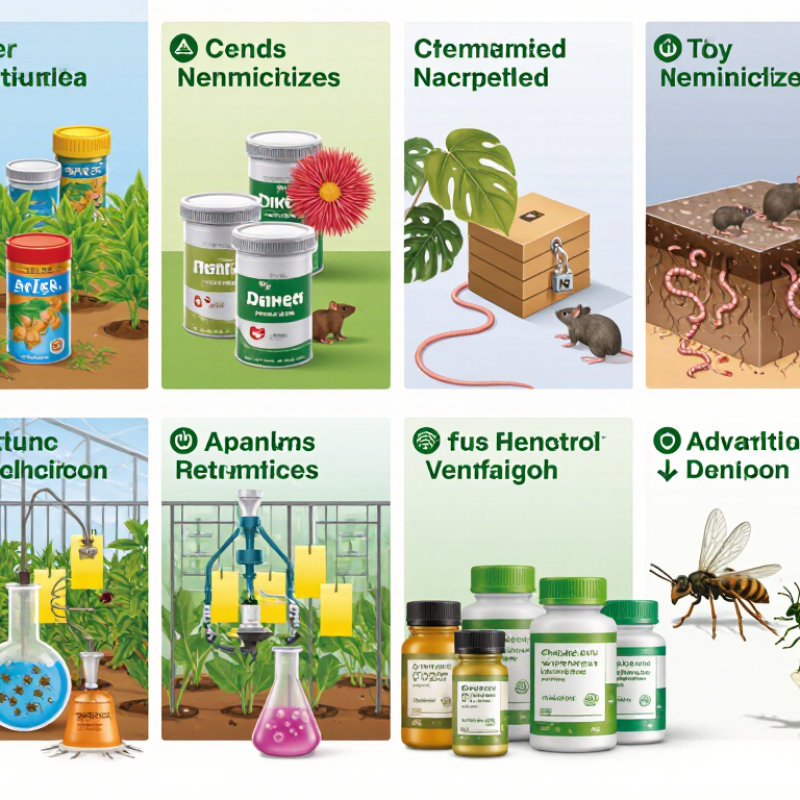
Rodenticides, nematicides, and biological controls serve different pest pressures. Rodenticides target rats and mice around farms, warehouses, and food facilities. Nematicides reduce microscopic worms that damage roots and restrict nutrient uptake. Biological controls use predators, parasites, beneficial microbes, or naturally derived compounds.

Selection starts with accurate pest identification. A damaged root does not always indicate nematodes. Soil testing, trapping records, and crop history provide stronger evidence. Field evidence matters. Buyers should compare active ingredients, application timing, formulation, resistance risks, and effects on non-target organisms. Moisture, temperature, soil texture, and storage conditions can change performance. A product that works in warm, heavy soil may perform poorly in dry, sandy fields.

For rodenticides, secure bait stations and monitoring plans reduce exposure to livestock and wildlife. For nematicides, buyers should check crop compatibility and application equipment before ordering. Biological controls need careful handling because heat, sunlight, and poor storage can reduce viability. Local registration, label directions, worker protection requirements, and residue standards must be verified before purchase. Technical documents should state concentration, shelf life, batch information, and recommended use rates. A low price can hide higher labor costs. A convenient product can still fail without field scouting. Even experienced buyers sometimes overvalue laboratory results and underestimate farm conditions. Small demonstration trials can reveal these gaps before wider deployment.

Contact Us

Reach out to our dealer network