What Are Pockels Cells and Their Applications in Industry?
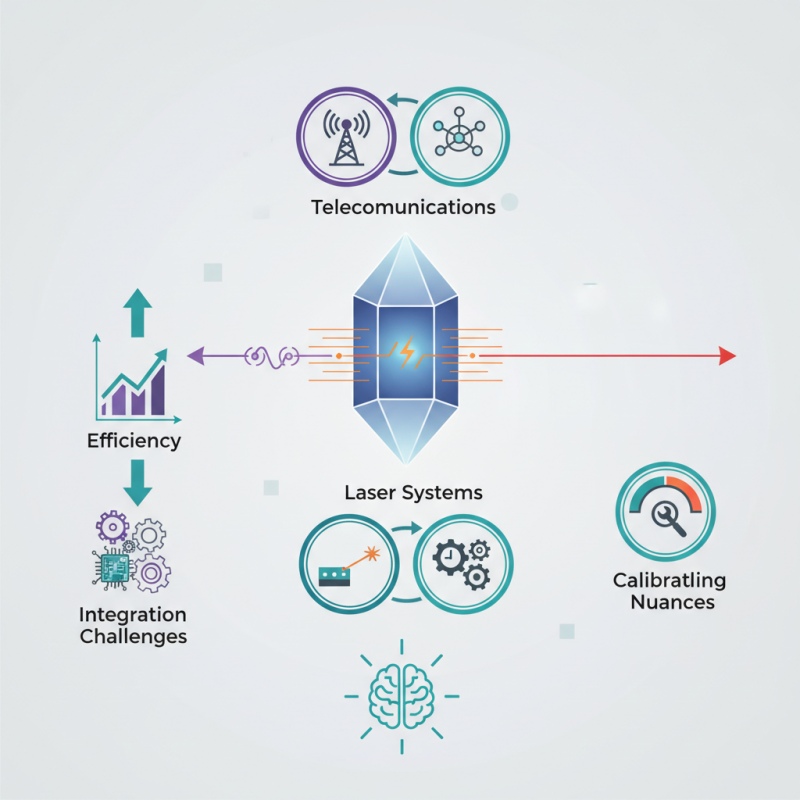
Pockels Cells are semiconducting devices crucial for light modulation. They leverage the electro-optic effect to change light polarization. This technology is essential in various industrial applications, including telecommunications and laser systems.
The significance of Pockels Cells lies in their ability to control laser beams. They enable precise adjustments in light intensity and timing, which is vital in many fields. Industries can utilize this for enhanced communication systems, optical switching, and advanced imaging technologies.
Despite their importance, challenges remain. For instance, efficiency and integration with existing systems can be complex. Some applications may require substantial calibration for optimal performance. Understanding the nuances of Pockels Cells is essential for harnessing their full potential in industrial applications.
What Are Pockels Cells? An Overview of Their Functionality
Pockels cells are devices that manipulate light using electric fields. They rely on the electro-optic effect, enabling modulation of light waves with precision. This technology is vital in various fields, including telecommunications, medical imaging, and laser technology.
In medical imaging, Pockels cells play a crucial role. They adjust the intensity of laser beams for better clarity. Their fast response times help in capturing detailed images. This accuracy is essential in surgeries and diagnostics. In telecommunications, they improve data transmission. By modulating light signals, they enhance communication speed.
Despite their benefits, Pockels cells can be complex. They require careful calibration and optimal conditions for best performance. Environmental factors may also affect consistency. Understanding these limitations is important for maximizing efficiency. This highlights the need for ongoing research and development in this area.
The Principle of Electro-Optic Effect in Pockels Cells
Pockels cells utilize the electro-optic effect. This effect enables the control of light transmission through materials. When an electric field is applied, the refractive index changes. This alteration affects how light passes through the device.
These cells are vital in many applications. They are used in modulators and switches within laser systems. Industries such as telecommunications and medical devices rely on them. The efficiency and precision they offer are unmatched in critical systems.
Tips: Consider experimenting with Pockels cells in your setups. Begin with small-scale projects to observe their potential. Understanding the parameters can improve outcomes. Reflect on your methodology. Adjustments can lead to better results in complex applications.
Key Manufacturing Industries Utilizing Pockels Cells Today
Pockels cells are essential devices in various manufacturing sectors today. They enable precise control of light in optical systems, making them invaluable for industrial applications. In telecommunications, Pockels cells regulate laser beams to ensure clear data transmission over fiber optics. This enhances communication quality and increases data rates.
The automotive industry also benefits from Pockels cells. They are used in laser-based measurement systems. These systems ensure high precision in manufacturing processes, such as cutting and welding. By improving accuracy, they help reduce waste and enhance production efficiency. However, their integration can be complex and requires skilled personnel for optimal use.
In the medical field, Pockels cells support advanced imaging techniques. They allow for better diagnosis through enhanced optical clarity. These applications showcase the diverse utilization of Pockels cells across various industries. Yet, some companies may not fully realize their potential. Continuous evaluation and adaptation are necessary to fully harness their capabilities in different sectors.
Market Analysis: Growth Trends of Pockels Cell Applications by 2025
The growth of Pockels cell applications is on a significant upward trajectory. Industries are increasingly adopting these electro-optic devices due to their unique properties. Pockels cells can modulate light with high precision. This modular capability supports various applications, including laser technology and telecommunications.
Market trends indicate a strong demand for Pockels cells by 2025. The telecommunications sector, in particular, is pushing for better light modulation systems. Advances in fiber optics and high-speed communication drive this need. Furthermore, the aerospace industry is incorporating Pockels cells into systems for enhanced imaging. User experience in optics is rapidly evolving, driven by this technology.
Despite the growth, challenges remain. Manufacturing complexities can lead to inconsistent quality. This inconsistency can create reliability issues in critical applications. Continued research and development are necessary to enhance production techniques. The industry must address these shortcomings to fully harness the potential of Pockels cells. As applications expand, ongoing improvements will be essential.
Future Innovations in Pockels Cell Technology and Industry Impact
Pockels cells, known for their electro-optical properties, are gaining traction in various industries. The future of Pockels cell technology holds exciting prospects. Innovations may lead to enhanced performance in laser systems and telecommunications. Researchers are exploring materials that improve efficiency and reduce costs. These advancements could revolutionize the way we use light in precision applications.
The impact on industries can be profound. In the medical field, Pockels cells can enhance laser surgeries, offering greater control and precision. This technology could also find applications in environmental monitoring, allowing for more accurate data collection. There is a significant push for miniaturization, which can make these devices more accessible. While the potential is vast, challenges remain. Balancing cost with performance is a constant struggle.
Some issues arise with scaling production. Manufacturers often face difficulties in maintaining quality while expanding output. Additionally, not all applications require high-performance cells, leading to underutilization. This complicates broader adoption. Ultimately, stakeholders must weigh the pros and cons. This reflection is critical as we navigate the future of Pockels cells in industry.