
How to Choose the Right Air Breaker in 2026?
Choosing the right Air Breaker in 2026 requires more than comparing prices and catalog ratings. It demands a clear understanding of the electrical system, operating environment, and future load changes. A breaker protects people, equipment, and wiring when current rises beyond safe limits. The wrong choice may trip too often, fail to interrupt a fault, or create unnecessary maintenance costs.
This guide examines practical selection factors used by qualified electrical professionals. These include rated current, breaking capacity, voltage, pole configuration, trip characteristics, installation method, and coordination with upstream devices. A workshop with motor loads needs different protection from a small commercial office. Dust, heat, moisture, vibration, and limited panel space also matter. A reliable decision begins with measured data, not guesswork.
Standards and manufacturer documentation should guide the final selection. Certification requirements may vary by region, so local electrical rules and inspection practices must be checked. Product labels, test reports, and technical datasheets offer stronger evidence than vague marketing claims. Still, no selection method is perfect. Real installations sometimes reveal unexpected inrush current, poor ventilation, or aging cables. That is why inspection, professional verification, and periodic testing remain essential. This article will help you compare Air Breaker options with greater confidence, while recognizing the limits of a paper-based recommendation. Safety comes first.
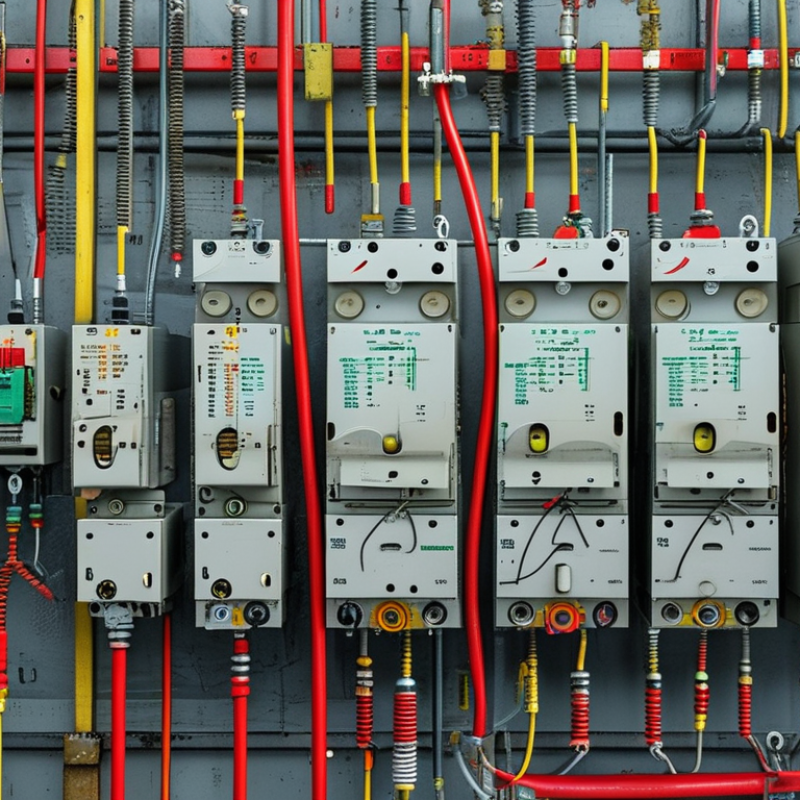
What Is an Air Breaker and How Does It Work?
An air breaker, commonly called an air circuit breaker, protects low-voltage electrical systems from dangerous current. It uses ordinary air to extinguish the arc created when its contacts separate. Unlike a fuse, it can open the circuit and usually be reset after the fault is cleared.
Inside the breaker, fixed and moving contacts carry normal load current. When an overload or short circuit occurs, a thermal, magnetic, or electronic trip unit detects the abnormal condition. The mechanism releases the contacts quickly. An arc then forms between them. Arc chutes divide, cool, and stretch the arc until it stops conducting. No compressed air is normally required.
A practical inspection should examine the rated current, interrupting capacity, voltage, pole arrangement, and trip settings. The breaker must match the panel, conductor size, and expected fault level. In large installations, electronic protection can provide adjustable long-time, short-time, instantaneous, and ground-fault functions. Settings need coordination with upstream and downstream devices.
The label alone is not enough. Installation conditions matter. Dust, heat, humidity, and frequent switching can affect performance. During maintenance, technicians should check contact wear, insulation condition, terminal tightness, and mechanical operation. Testing with suitable equipment is more reliable than visual judgment. I would not select a breaker only because its current rating looks correct. That shortcut often misses interrupting capacity and coordination. Small details matter.
How to Choose the Right Air Breaker in 2026? - What Is an Air Breaker and How Does It Work?
| Selection Dimension | Typical Values or Options | What It Means | Selection Guidance |
|---|---|---|---|
| Operating principle | Arc interruption in atmospheric air | The breaker separates contacts and uses air and an arc-control structure to extinguish the electrical arc. | Use an air breaker where accessible, maintainable low-voltage switchgear is required. |
| System voltage | Common low-voltage systems: 400/415 V and 480/600 V; some equipment is rated up to 690 V AC | The rated operational voltage must be equal to or higher than the system voltage. | Check the actual line-to-line voltage, frequency, grounding arrangement, and applicable local standard before selection. |
| Continuous current rating | Common frame and sensor ranges: approximately 630–6,300 A | The breaker’s rated current is the maximum continuous current it can carry under specified conditions. | Choose a rating above the calculated design current, while coordinating with cable, busbar, and temperature limits. |
| Number of poles | 3-pole or 4-pole | A 3-pole breaker switches the three phases; a 4-pole version also switches the neutral. | Select 4-pole equipment when the neutral must be switched or when the installation rules require full isolation. |
| Short-circuit breaking capacity | Often about 42–150 kA at the rated voltage, depending on the design | This is the maximum prospective short-circuit current the breaker can safely interrupt under its test conditions. | Obtain the prospective short-circuit current from a fault study and choose a certified interrupting rating at least as high. |
| Trip-unit type | Thermal-magnetic or electronic | The trip unit detects overloads and short circuits and commands the operating mechanism to open. | Electronic trip units are generally preferable when adjustable protection, metering, or communication is needed. |
| Long-time overload protection | Adjustable pickup and time delay on many electronic trip units | Protects conductors and equipment from sustained overcurrent and allows coordination with downstream devices. | Set the pickup below the permitted conductor ampacity and coordinate the delay with downstream protection. |
| Short-time protection | Adjustable pickup and delay on many electronic trip units | Provides selective coordination by allowing a downstream breaker to clear a fault first when appropriate. | Use only when the switchgear and protection study support the required withstand time. |
| Instantaneous protection | Fast trip for high-magnitude faults | Opens the circuit with minimal intentional delay during severe short circuits. | Verify that the setting is high enough to avoid nuisance trips but low enough to protect against major faults. |
| Ground-fault protection | Optional or integrated, depending on the trip unit and system design | Detects current flowing through an unintended ground-fault path. | Consider it for large feeders, service entrances, generators, and installations requiring additional ground-fault protection. |
| Installation format | Fixed or drawout | A fixed breaker is permanently connected; a drawout breaker can be moved between connected, test, and disconnected positions. | Choose drawout construction when testing, maintenance, and reduced outage time are priorities. |
| Control voltage | Common auxiliary supplies include 24 V DC, 48 V DC, 110/120 V AC or DC, and 220/240 V AC or DC | The control supply powers shunt trips, closing releases, undervoltage releases, and motor operators. | Match the control voltage to the site’s reliable auxiliary power system and verify AC/DC compatibility. |
| Standards and certification | IEC 60947-2 or the applicable national equivalent | The standard defines requirements and verification tests for low-voltage circuit breakers. | Confirm that the complete breaker and switchgear assembly are certified for the intended installation. |
| Maintenance requirements | Inspection, cleaning, connection checks, mechanical operation checks, and trip testing | Air breakers rely on accessible mechanical and electrical components that require periodic inspection. | Follow the equipment manufacturer’s maintenance schedule and the site’s electrical safety procedures. |
Note: Ratings and ranges shown are representative industry values. Always verify the exact technical data, fault level, installation conditions, and applicable electrical code before specifying an air breaker.
